in alphabetical order
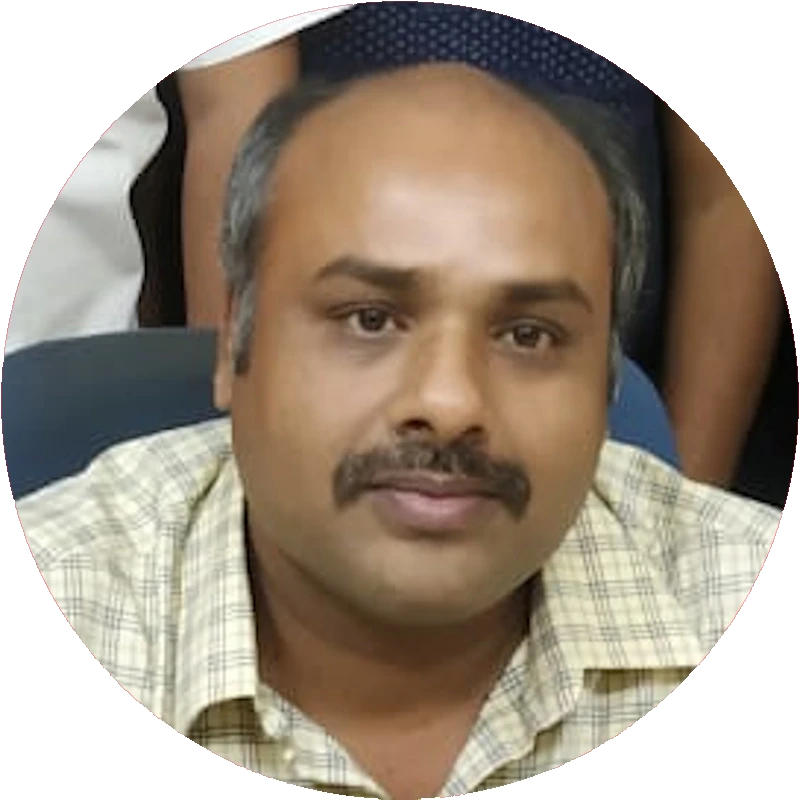 Abhijit Chatterjee is an Associate Professor at Bose Institute, Kolkata, specializing in atmospheric chemistry and environmental sciences. As the Nodal Scientist for West Bengal under a national mission, he focuses on air quality, aerosol chemistry, and climate change impacts, particularly in the Himalayas and urban tropics. His research explores black and brown carbon behavior, aerosol-cloud interactions, and long-term air pollution trends in India. With over 50 publications, Chatterjee has significantly contributed to understanding atmospheric pollution sources and mitigation strategies. He also mentors PhD students and teaches atmospheric science, advancing interdisciplinary research at Bose Institute.
 Alok Jain is the CEO and Managing Director of Trans-consult, a globally recognized management consulting firm focused on sustainable urban mobility and technology-driven public transport solutions. With over 30 years of experience, Jain is an expert in public transport operations, specializing in AI, data analytics, and clean fuel technologies. He has collaborated with major operators like MTR Corporation and Kowloon Motor Bus in Hong Kong. An international trainer for the UITP, a Fellow at Civic Exchange, and a speaker on multi-modal integration, Jain also teaches at the University of Hong Kong and contributes to transport policy initiatives.
 Ashoke Viswanathan is an award winning filmmaker with 13 feature films to his credit, and more than 150 documentary, telefilm and short films. He has twice chaired the National Film Awards jury, and is a regular theatre director, actor and playwright. He is a Charles Wallace scholar at Downing College Cambridge, and has been Professor and Dean at SRFTI (Kolkata) and a Visiting Professor at Tufts University, Boston and Monmouth University, New Jersey besides lecturing at FTII, Jadavpur University, the Heritage Academy and St. Xavier's College. He has published two volumes of poetry in addition to verse.
  Dr. Bhargab Maitra is a distinguished Professor of Civil Engineering at IIT Kharagpur, specializing in Transportation Engineering. With a Ph.D. from IIT Bombay and an M.Tech from IIT Kanpur, he is an acclaimed expert in traffic engineering, transport planning, and road safety. Maitra has authored nearly 100 publications and led numerous high-impact research projects funded by the Indian government. An Alexander von Humboldt and DAAD Fellow, he received the Pt. Jawaharlal Nehru Birth Centenary Award from the Indian Roads Congress. His work focuses on urban mobility, public transport systems, and innovative traffic management solutions, significantly influencing transportation policies in India.
 Goutam Ghose is a renowned Indian film director, cinematographer, and music director, celebrated for his work in Bengali cinema. Emerging from the Parallel Cinema movement, he blends documentary realism with poetic storytelling, focusing on the marginalized. His notable films, including Antarjali Jatra, Padma Nadir Majhi, and Moner Manush, have earned him multiple National Film Awards. Ghose is the only Indian to receive Italy’s Vittorio Di Sica Award (1997) and was honored with the Banga Bibhushan (2012) and Knighthood of the Star of Italian Solidarity (2006). A Calcutta University graduate, he began with documentaries in 1973.
 Jayanta Basu is a Kolkata-based freelance journalist renowned for his environmental and climate change reporting. Associated with The Telegraph (ABP Pvt Limited), he also contributes to Down To Earth and international outlets like HuffPost. Since 2009, he has covered global climate meetings and led impactful environmental campaigns in eastern India, earning the 2020 Paryawaran Sarankshak Samman award. A faculty member at the University of Calcutta, Basu combines academic rigor with journalism, focusing on urban pollution, climate justice, and ecological conservation. His work amplifies marginalized voices and critiques systemic environmental challenges.
 Jawhar Sircar is a retired Indian Administrative Service officer and public intellectual. Joining the IAS in 1975, he served as India’s longest-serving Culture Secretary (2008-2012) and CEO of Prasar Bharati (2012-2016). Elected to the Rajya Sabha in August 2021 as a Trinamool Congress (TMC) MP from West Bengal, he resigned on September 13, 2024, protesting the TMC government’s handling of the Kolkata rape-murder case and corruption. A vocal critic of authoritarianism, Sircar has authored works on history and culture, earning praise from leaders like Manmohan Singh for his distinguished service.
 Krishna Ray is an Associate Professor of the Department of Botany, West Bengal State University, researching in Biotechnology and Botany. She has been working on ecological restoration of degraded mangrove patches outside the protected areas in Indian Sundarbans settlement regions in the shoreline mangroves lining the estuarine rivers in Patharpratima Block since 2014 with financial assistance from Department of Biotechnology, Government of India and support from Forest Department, Govt. of West Bengal. Semi-restored patches are harbouring almost 30 species of mangroves and associate species including rare and threatened ones, associated fauna, and huge natural regeneration of mangrove seedlings in each season, proving the restoration of functionality of the ecosystem as a whole.
 Dr. Kunal Sarkar is a renowned cardiac surgeon based in Kolkata, India, with over 25 years of experience. As Senior Vice Chairman and Head of Cardiac Surgery at Medica Superspecialty Hospital, he has performed over 17,000 coronary bypass surgeries, earning global recognition. A graduate of Medical College, Calcutta, he trained at St. Mary’s Hospital, UK, and is a Fellow of the Royal College of Surgeons, Edinburgh and Glasgow. Past President of the Indian Association of Cardiovascular and Thoracic Surgeons, he co-founded the Kolkata Heart Foundation in 2015. Dr. Sarkar is also a noted debater and cultural figure in Kolkata.
 Mahadeb Shi is a Kolkata-based filmmaker and co-founder of Tramjatra, a cultural festival initiated in 1996 to celebrate and preserve the tram heritage of Kolkata and Melbourne. As an activist, Shi uses art, film, and public engagement to advocate for trams as an eco-friendly transport solution amid climate change concerns. He is Artistic Director and co-curating the 2025 Sundarban Tramjatra. His documentary "Tramjatra" highlights the 20-year friendship between the two cities' tram communities, emphasizing sustainability and cultural exchange. Shi, also the secretary of the Calcutta Tram Users’ Association, tirelessly campaigns against misconceptions about trams, pushing for their modernisation and survival in Kolkata.
 Dr. Mahalaya Chatterjee is a distinguished Professor of Economics at the University of Calcutta, specializing in urban economics, planning, gender, and female work. With a career spanning decades, she has served as Director of the Centre for Urban Economic Studies (2010-2017) and Head of the Economics Department (2012-2014). A prolific researcher, she has authored 17 publications and coordinated the Post Graduate Diploma in Urban Management and Planning. As President of the Calcutta University Teachers’ Association, she advocates for academic autonomy. Her work critically examines urbanization trends, notably in West Bengal, earning her widespread recognition.
 Mick Douglas is an Australian artist and curator, creative practice researcher and co-founder of Tramjatra. An RMIT University Associate Professor, Douglas has authored Tramjatra: Imagining Melbourne and Kolkata by Tramways and led projects like ‘W-11 Tram’ for the 2006 Melbourne Commonwealth Games Cultural Festival. His work, including co-curating 2025 Sundarban Tramjatra, blends performance, installation, and socially engaged art, fostering dialogue on urban transport and ecological resilience across continents. He is the temporary steward of 40-acres of revegetating bushland on the traditional land of the DjabWurrung and Jardawajali people in S-E Australia, where climate change and colonial land management practices are increasing the frequency and force of extreme wildfires.
  Dr. Punyasloke Bhadury is a Professor of Biological Sciences at the Indian Institute of Science Education and Research (IISER) Kolkata. Holding an M.Sc. from Edinburgh, a Ph.D. from Plymouth, and postdoctoral experience from Princeton, he joined IISER Kolkata in 2009. A 2019 SwarnaJayanti Fellowship recipient, his research explores microbial biocomplexity, biogeochemical cycling, and ecosystem restoration, particularly in mangroves like the Sundarbans. With over 80 publications, he develops cost-effective technologies for waste management and coastal biomonitoring. Bhadury represented India at the 2023 UN Ocean Action meeting, showcasing his global environmental impact.
 Pradeep Kumar Vyas is a senior Indian Administrative Service (IAS) officer of the 1989 Maharashtra cadre, currently serving as Vigilance Commissioner in the Central Vigilance Commission (CVC) of India. With a career spanning over three decades, he has held key positions, including Additional Chief Secretary of Maharashtra’s Tribal Development Department. Known for his expertise in governance and administration, Vyas was appointed to the CVC in March 2023, tasked with overseeing anti-corruption efforts across central government bodies. A graduate in Economics from St. Stephen’s College, Delhi, he brings a wealth of experience to this critical role.
 Pradeep Kakkar is a prominent environmental activist based in Kolkata, India, co-founder of the NGO People United for Better Living in Calcutta (PUBLIC). Alongside his wife, Bonani Kakkar, he has championed urban environmental causes for over 25 years, notably leading efforts to protect the East Kolkata Wetlands. Their work culminated in a landmark 1992 Calcutta High Court ruling safeguarding the 12,500-acre ecosystem. Kakkar’s activism focuses on reducing noise and air pollution, engaging school children in campaigns, and collaborating with local authorities. His book, Once Upon a City, chronicles PUBLIC’s citizen-driven initiatives for a sustainable Kolkata.
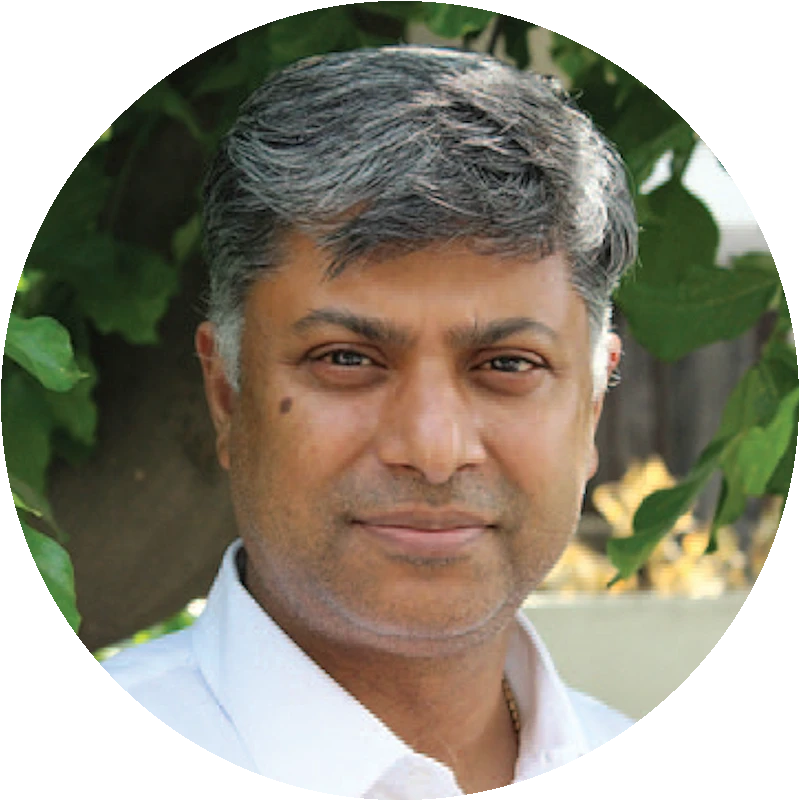 Ritwick Dutta is a prominent Indian environmental lawyer and founder of the Legal Initiative for Forest and Environment (LIFE), established in 2005. With over two decades of experience, he has litigated over 350 cases, championing environmental justice and community rights. His work secured landmark judgments, including the 2013 Supreme Court ruling protecting tribal consent in mining cases. LIFE, under his leadership, won the 2021 Right Livelihood Award for empowering vulnerable communities. Facing allegations of FCRA violations in 2023, Dutta remains a key figure in India’s environmental democracy movement, advocating for transparency and accountability.
 Roberto D’Andrea is a former Melbourne tram conductor, environmental educator and co-founder of Tramjatra. Inspired by a 1994 visit to Kolkata, he co-founded this initiative to celebrate trams’ environmental and cultural value. A former advocate for Melbourne’s tram conductors, D’Andrea has decorated 13 trams in Kolkata and seven in Melbourne, blending art, performance, and activism. His work, including co-curating 2025 Sundarban Tramjatra, promotes sustainable transport and strengthens Australia-India ties, earning global recognition. For over two decades, he has expanded the conductor’s craft of making human connection with oral storytelling and ticket exchange to become an innovative grass-roots environmental educator, with his performance troupe ‘The Connies’.
  Sanjay Vashist is the Director of Climate Action Network South Asia (CANSA), a coalition of over 200 NGOs across eight South Asian countries, focused on climate policy advocacy. With a Master’s in Forestry from Anand Agricultural University, he brings over 25 years of experience in natural resource management, climate change, and environmental justice. Under his leadership, CANSA’s membership grew tenfold, amplifying South Asia’s voice in global climate negotiations. Previously, he advised the Heinrich Boell Foundation’s Climate Change Programme in India and worked with TERI. A skilled communicator and photographer, Vashist drives regional cooperation on climate resilience.
 Subhas Acharya is a notable member of the Sundarban Development Board, contributing to the socio-economic upliftment of West Bengal’s Sundarban region. With a career rooted in the West Bengal government’s Sundarban development efforts, he has extensive experience in managing environmental and infrastructural challenges. Acharya played a key role in assessing Cyclone Amphan’s impact in 2020, noting how timing mitigated worse devastation to the region’s embankments. His work focuses on balancing development with ecological preservation in this UNESCO World Heritage site, addressing issues like connectivity, irrigation, and livelihoods for the region’s marginalized communities.
 Dr. Tathagata Chatterji is a Professor of Urban Management and Governance at XIM University, Bhubaneswar, India, with over 35 years of experience in urban development. Holding an Architecture degree from Calcutta University, a Master’s in Urban Design from Kent State University, and a Ph.D. in Urban Planning from the University of Queensland, he previously taught at institutions like the School of Planning and Architecture, Vijayawada. His research focuses on urban sustainability, economic development, and governance, with four books and numerous publications to his credit. He received the 2016 Gerd Albers Award from ISOCARP.
 Dr. Tuhin Ghosh is a Professor and Director of the School of Oceanographic Studies at Jadavpur University, Kolkata, India. A coastal geomorphology expert, his research spans disaster management, climate change impacts, adaptation strategies, and human migration. He served as a Lead Author for the IPCC Special Report on Ocean and Cryosphere, focusing on sea level rise, and contributes to Urban Climate Science in UCCRN ARC3.3. Ghosh led India’s efforts in the ‘ESPA-Delta,’ ‘DECCMA,’ and ‘Living Deltas’ projects. With over 140 publications, he significantly influences coastal and deltaic sustainability policies.

